
September 4, 2026
Is Mom or Dad Safe Home Alone at Night? Warning Signs It's Time for Home Care
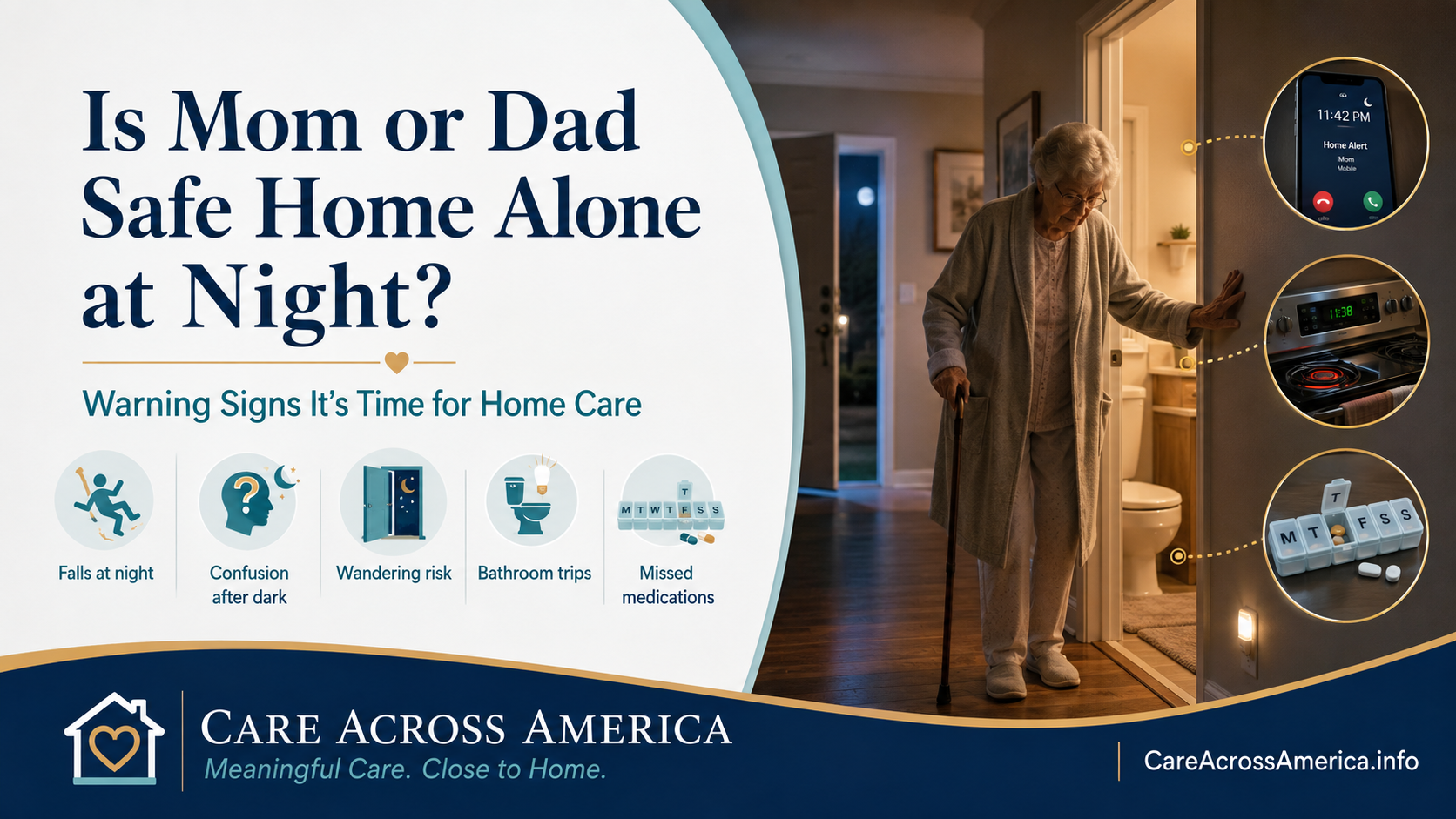
Daytime is easy to check on. You call, you visit, a neighbor waves hello, a delivery driver notices something's off. Nighttime is different. From about 9 p.m. to 7 a.m., most aging parents living alone have no one watching, no one to hear a fall, and no one to notice confusion until morning. That gap is exactly why so many families realize a parent needs help only after something has already gone wrong overnight.
The good news is that there are clear, recognizable warning signs that show up well before a crisis, if you know what to look for. This guide walks through the signs that matter most, why nighttime carries extra risk, and how to know when it's time to bring in help.
Why Nighttime Is the Riskiest Time to Be Alone
A few things stack up after dark that don't apply during the day.
Falls are more likely, and less likely to be caught quickly. More than 1 in 4 adults over 65 falls at least once a year, and falling once roughly doubles the chance of falling again. At night, rooms are darker, reflexes and eyesight are already weaker, and a person is often walking half-asleep to the bathroom. If your parent falls at 2 a.m. and can't reach a phone, they may be on the floor for hours.
Nighttime bathroom trips add risk on top of risk. Frequent nighttime urination, a common condition called nocturia, is one of the most consistent risk factors researchers link to falls in older adults, since it means getting up in the dark, often groggy, multiple times a night.
Confusion can get worse after dark. For people with dementia or Alzheimer's, a pattern called sundowning causes increased confusion, agitation, and restlessness in the late afternoon and evening. Family members often describe a parent who seems fine during a daytime visit but sounds completely different on a phone call at 8 p.m.
Wandering happens more than most families expect. Roughly 6 in 10 people living with dementia will wander at least once, and it's often at night, when they wake up disoriented and don't recognize their own home. A parent who wanders outside alone at night, in any weather, is in real danger within minutes.
The Physical Warning Signs
Watch for these signs during visits or calls, especially if they're new or getting worse:
- New bruises, scrapes, or an injury your parent can't quite explain
- Furniture that's been moved or rearranged to help them steady themselves while walking
- A growing fear of using the stairs, or avoiding a part of the house altogether
- Difficulty getting up from a chair, bed, or the toilet without a struggle
- Holding onto walls or furniture while moving around the house
Cognitive and Nighttime-Specific Warning Signs
These are some of the clearest signals that nighttime alone has become unsafe:
- Phone calls or texts late at night that sound confused, anxious, or don't match how your parent seems during the day
- Finding the stove, oven, or a space heater left on in the morning
- Waking up to find your parent has been up much of the night, pacing or unable to settle
- Doors or windows found unlocked or open that your parent doesn't remember opening
- Getting lost or disoriented inside their own home, especially after dark
- A neighbor mentioning they've seen your parent outside alone at unusual hours
Everyday Warning Signs Worth Watching
Nighttime risk usually shows up alongside other changes during the day. Look for:
- Missed medication doses, or pills that are noticeably out of order in a pillbox
- Spoiled food in the refrigerator or a noticeable drop in regular meals
- A decline in hygiene or wearing the same clothes for days
- Unpaid bills, late notices, or confusion about money that wasn't there before
- Withdrawing from friends, hobbies, or activities they used to enjoy
- Unsafe driving, or getting lost on familiar routes
Find a Home Care Provider Near You
Search the Care Across America directory to connect with trusted home care agencies serving your city and state.
Browse the Home Care DirectoryRed Flags That Mean Don't Wait
Most warning signs build gradually, giving families time to plan. A few don't, and they call for action right away rather than continued monitoring:
- Your parent wandered outside and didn't know how to get back home
- A fall resulted in an injury, or they couldn't get up on their own
- They left a stove burner or space heater on and didn't notice
- They didn't recognize you, their home, or where they were
- They took the wrong medication or the wrong dose
If any of these have already happened once, treat it as a warning that the current setup isn't safe, not as a one-time fluke. These situations tend to repeat, and the next one is often worse than the last.
The "Could I Sleep Through It?" Test
Here's a simple way to think it through with your siblings. Picture your parent at 2 a.m., alone. If they fell, wandered outside, left a burner on, or became suddenly confused, would anyone know before morning? If the honest answer is no, that's not a reason for guilt. It's information. It tells you the current setup has a real gap, and it's worth closing before, not after, something happens.
When These Signs Mean It's Time for Home Care
You don't have to choose between doing nothing and moving a parent out of their home. Overnight support exists on a spectrum, and most families start smaller than they expect:
- A medical alert device that your parent wears, which connects to help with the push of a button or, with fall-detection models, automatically.
- Remote check-in technology, like motion sensors or smart devices that alert family if there's no normal activity by a certain time each morning.
- An overnight caregiver a few nights a week, especially on nights when confusion, wandering, or bathroom trips tend to happen most.
- Live-in or 24-hour home care, when falls, wandering, or confusion are frequent enough that any night alone carries real risk.
The right starting point depends on how often these signs are showing up and how severe they've become. A single missed pill isn't the same as wandering outside at night; both matter, but they call for different responses.
A few practical next steps make this easier to act on instead of just worry about:
- Talk to your parent's doctor about what you're seeing. A sudden change in confusion, balance, or nighttime behavior can sometimes point to a treatable cause, like a medication interaction, a urinary tract infection, or a sleep disorder.
- Ask about a short trial period, such as an overnight caregiver for one or two nights a week, before committing to a bigger arrangement. Many families find it's easier for a parent to accept care in small steps.
- Loop in siblings or other family members early, and use the checklist below as a shared, factual starting point rather than a debate about whose impression is right.
A Quick Checklist to Review With Family
| Warning Sign | Seen It? |
|---|---|
| Fall or near-fall in the last 6 months | |
| Confused or unusual phone calls at night | |
| Stove, oven, or appliance left on overnight | |
| Wandering or found outside alone unexpectedly | |
| Frequent nighttime bathroom trips with unsteady walking | |
| Missed medications or mixed-up pillbox | |
| Unsafe or unusual behavior noticed by a neighbor |
Checking two or more boxes is a reasonable signal to start looking into home care options now, not after the next incident.
Frequently Asked Questions
Is some memory loss and slowing down just normal aging? Some slowing down is typical, but sudden changes, especially new confusion after dark, getting lost at home, or wandering, are not considered normal aging and are worth discussing with your parent's doctor.
What if my parent insists they're fine and refuses help? This is common, and it usually goes better when you frame it around specific incidents ("I'm worried about the stove being left on") rather than general decline. Starting with something small, like a medical alert device or a few nights of check-in visits, is often easier for a parent to accept than a bigger change all at once.
Is a medical alert device enough, or do we need a caregiver? A medical alert device helps after something happens. It doesn't prevent a fall, catch wandering before it starts, or notice confusion building through the evening. For parents with dementia, mobility issues, or a recent fall, an in-person caregiver during higher-risk hours adds a layer of prevention a device can't.
How much does overnight home care cost, and does insurance cover it? Overnight and live-in home care is non-medical care, so it isn't covered by Medicare. Families typically pay privately, through long-term care insurance, Medicaid home and community-based waivers, or VA benefits for eligible veterans. We cover each of those funding paths in detail in [our companion article on paying for home care].
This article is for general education and isn't a substitute for a medical evaluation. If you notice sudden or severe changes in a parent's memory, mobility, or behavior, contact their doctor promptly.
Frequently Asked Questions
s some memory loss and slowing down just normal aging?
Some slowing down is typical, but sudden changes, especially new confusion after dark, getting lost at home, or wandering, are not considered normal aging and are worth discussing with your parent's doctor.
What if my parent insists they're fine and refuses help?
This is common, and it usually goes better when you frame it around specific incidents ("I'm worried about the stove being left on") rather than general decline. Starting with something small, like a medical alert device or a few nights of check-in visits, is often easier for a parent to accept than a bigger change all at once.
Is a medical alert device enough, or do we need a caregiver?
A medical alert device helps after something happens. It doesn't prevent a fall, catch wandering before it starts, or notice confusion building through the evening. For parents with dementia, mobility issues, or a recent fall, an in-person caregiver during higher-risk hours adds a layer of prevention a device can't.
How much does overnight home care cost, and does insurance cover it?
Overnight and live-in home care is non-medical care, so it isn't covered by Medicare. Families typically pay privately, through long-term care insurance, Medicaid home and community-based waivers, or VA benefits for eligible veterans. We cover each of those funding paths in detail in [our companion article on paying for home care].
Written By
Valerie VanBooven RN BSN
Valerie VanBooven RN BSN is a registered nurse, wife, mom, and published author of several books on long-term care and elder care. She is the Founder and Co-Owner of Approved Senior Network® and the founder of Care Across America®.
Find a Home Care Provider Near You
Search the Care Across America directory to connect with trusted home care agencies serving your city and state.
Browse the Home Care DirectoryRecent Posts