
September 22, 2026
Caregiving From a Thousand Miles Away
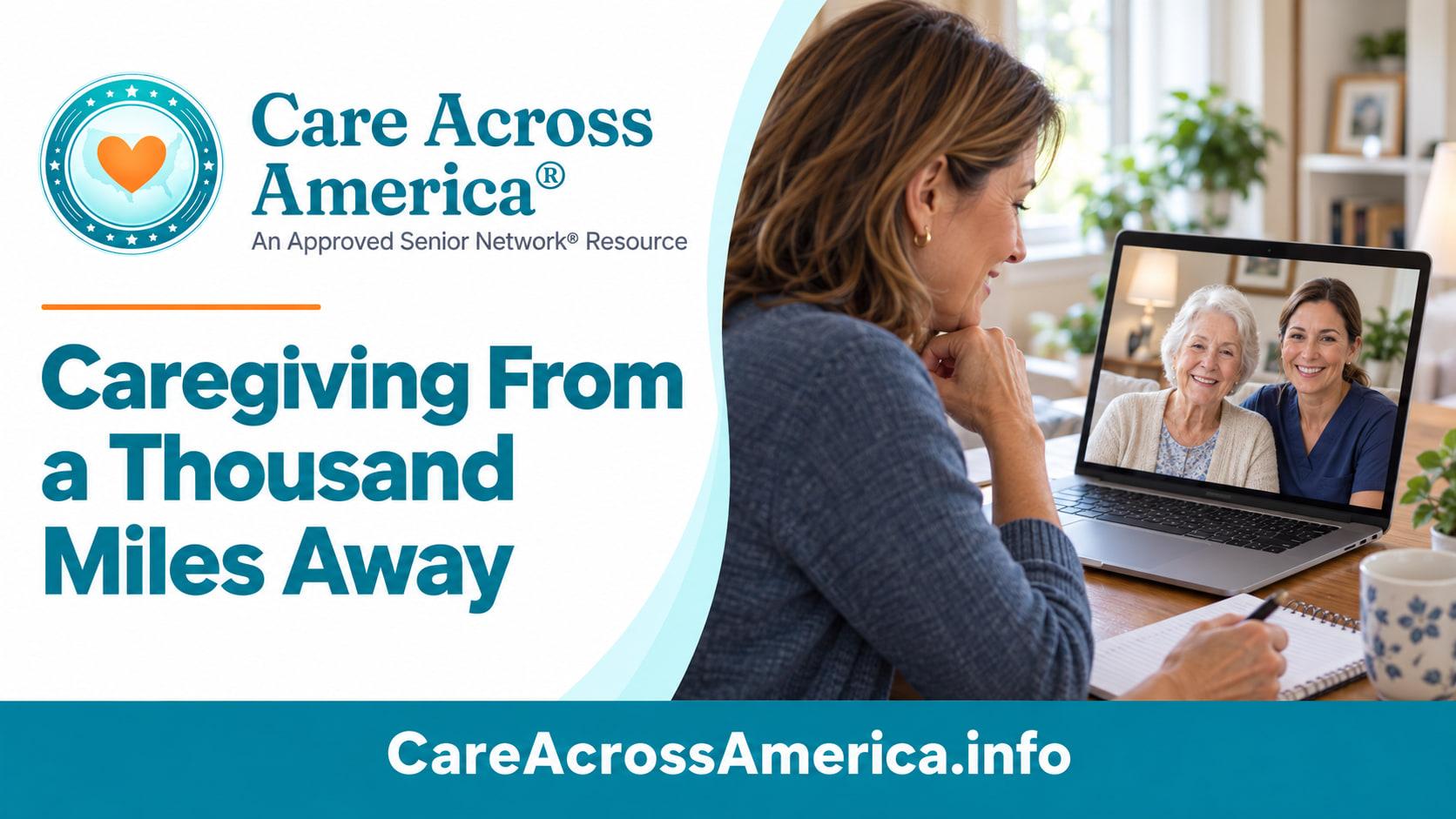
The phone call always sounds the same.
"Everything's fine, sweetheart. How are the kids?"
Then you visit at Thanksgiving and find three months of unopened mail, a fridge with nothing in it but condiments, and a bruise nobody has mentioned.
Why distance caregiving fails in predictable ways
Not because anyone is lying. Because you are relying on a channel that cannot carry the information you need.
On the phone, your mother sounds like your mother. She has decades of practice sounding fine. She is not being deceptive, she is being a parent, and parents protect their children from worry as a reflex that does not switch off at eighty.
Meanwhile the things that actually predict trouble are all physical and all invisible from a distance. What is in the fridge. Whether the pill organiser has Tuesday still full. Whether she is pushing off the arms of the chair to stand. Whether the bathroom smells wrong. Whether she has been out of the house this week.
No phone call gives you any of that.
The one change that matters most
Get regular eyes in the house, and make them eyes that report back.
This is the whole strategy, and everything else is detail. A caregiver on a fixed schedule, a neighbor who agrees to check in, or a care manager who visits monthly. Someone who is physically in the room often enough to notice change, and who will tell you the truth rather than protect you from it.
A caregiver going in twice a week for company and meals is not only doing those things. They are your early warning system. They see the weight loss before it is dramatic, the cough before it is pneumonia, the untouched medication, the new bruise.
For long-distance families this is usually the highest-value thing money can buy, and it is not primarily about the tasks.
Build a local bench before you need one
The worst time to find a plumber, a doctor, a pharmacy that delivers or a neighbor with a key is during a crisis, from another time zone, on a Sunday.
Put together a list now:
- Two neighbors with your phone number and, ideally, a key
- The primary care physician's office, and the name of whoever answers the phone
- A pharmacy that delivers, with your card on file
- A handyman, a plumber, an electrician
- The local Area Agency on Aging, which is free and knows what exists in that county
- A home care agency, chosen and vetted before you need it in a hurry
- A geriatric care manager, if the budget allows
Vet the home care agency while nothing is wrong. Interviewing agencies from an airport while your father is in an emergency room is how families end up with whoever could start on Monday.
The paperwork that decides whether you can help at all
This is the part people postpone, and it is the part that hurts most when it is missing.
You need, prepared properly by an attorney in your parent's state:
- Healthcare power of attorney, naming who decides if they cannot
- Durable financial power of attorney, so bills and care can be paid for
- A signed HIPAA authorisation naming you
That third one is the one families do not know about until it stops them. Without it, a hospital can legally decline to discuss your own parent's condition with you. People have stood in corridors, having flown across the country, unable to get a straight answer about their own mother.
Get all three done while your parent clearly has capacity. Once capacity is in question it becomes a court process, which is slow, expensive and public.
Find a Home Care Provider Near You
Search the Care Across America directory to connect with trusted home care agencies serving your city and state.
Browse the Home Care DirectoryMake your visits count for something other than reassurance
Visits are your only direct data, so use them deliberately.
- Open the fridge and the freezer. Check dates.
- Look at the pill organiser mid-week.
- Watch them stand up from a low chair without helping.
- Walk the route from bed to bathroom at night.
- Look at the mail pile and the unopened envelopes specifically.
- Check the bathroom for grab bars, and the floors for rugs.
- Go to a medical appointment with them if you can. One appointment tells you more than twenty phone calls.
Take notes and dates. Change over time is what matters, and memory across four months of visits is unreliable.
Our guide on signs your parent needs help at home is a useful checklist to take with you.
Divide the work honestly with siblings
Distance caregiving generates a specific kind of family resentment, and it runs in both directions.
The sibling who lives nearby does the driving, the appointments, the emergencies, the two hours on a Tuesday that nobody sees. The sibling far away often does the research, the finances, the insurance calls and the coordinating, and gets told they are not really involved.
Both are doing real work. Say so out loud, decide who owns what, and write it down. And if you are the distant one with more money than proximity, paying for professional care is a legitimate contribution rather than a way of buying out of it. Say that out loud too, because if you do not, your sibling will assume the worst version.
When distance stops working
There are situations that distance cannot manage, no matter how good the systems:
- Repeated falls, especially unwitnessed ones
- Wandering
- Medication errors with real consequences
- Rapid weight loss
- A hospital admission every few months
- Confusion that has begun to affect safety
At that point the honest options narrow to intensive in-home support with professional oversight, moving your parent closer to you, or a residential setting. All three are hard. Choosing between them deliberately, before an emergency chooses for you, is much better than the alternative.
Sources
Frequently Asked Questions
What is long-distance caregiving?
Managing or coordinating the care of an older adult you do not live near, typically more than an hour away. The work is real but it is different: less hands-on care, more coordinating, paying, researching, and trying to judge how things actually are from a distance.
How do I know how my parent is really doing if they say they are fine?
Stop relying on what they say and build in someone who sees the house. A regular caregiver, a neighbor, or a care manager gives you observed information: what is in the fridge, whether the pill organiser is being used, whether they are steady on their feet. A phone call cannot tell you any of that.
What paperwork should I have in place before there is a crisis?
A healthcare power of attorney, a durable financial power of attorney, and a signed HIPAA authorisation naming you, so clinicians can legally speak to you. Without that last one you can be shut out of a conversation about your own parent while standing in the hospital corridor. Have these prepared by an attorney before they are needed.
Is a care manager worth it if I live far away?
Often yes, and it is the single most useful hire for distance. A care manager, sometimes called an aging life care professional, assesses the situation, builds and revises the plan, attends medical appointments, and reports back. It is the closest substitute for being there yourself.
Written By
Valerie VanBooven RN BSN
Valerie VanBooven RN BSN is a registered nurse, wife, mom, and published author of several books on long-term care and elder care. She is the Founder and Co-Owner of Approved Senior Network® and the founder of Care Across America®.
More from Care Across America
Find a Home Care Provider Near You
Search the Care Across America directory to connect with trusted home care agencies serving your city and state.
Browse the Home Care DirectoryRecent Posts